
Laser tattoo removal is a professional treatment that uses advanced laser technology to safely and effectively fade or remove unwanted tattoos. It works by targeting the ink particles in the skin with concentrated beams of light, breaking them down into smaller fragments that the body can naturally eliminate through its immune system.
Unlike older tattoo removal methods that could damage the skin, modern laser technology focuses only on the pigment, leaving surrounding tissue largely unaffected. This makes it a precise and reliable way to remove tattoos with minimal risk of scarring.
Laser tattoo removal can treat tattoos of almost any colour, size or age. Although complete removal is possible in many cases, some lighter inks may fade rather than disappear completely.
There are several types of lasers used in tattoo removal, each suited to different pigment colours and skin types.
Q-switched lasers were the original standard in tattoo removal and are still commonly used today. They deliver powerful bursts of light energy in extremely short pulses, targeting the ink while minimising damage to surrounding skin.
Pico laser technology represents the latest advancement in tattoo removal. It delivers energy in picoseconds rather than nanoseconds, breaking down the ink into much smaller fragments. This allows for faster clearance, fewer sessions and a lower risk of side effects.
Your practitioner will assess your tattoo and skin type during consultation to determine which laser will be most effective. Factors such as ink colour, tattoo depth and your skin tone will influence this decision.
Tattoo ink sits deep within the dermis, the lower layer of the skin. The laser emits pulses of light that pass safely through the outer skin layers and are absorbed by the ink. This light energy causes the ink particles to heat rapidly and shatter into tiny fragments.
Over time, the body’s lymphatic system naturally flushes these fragments away. Each session targets a new layer of ink, gradually lightening the tattoo until the pigment is no longer visible.
Different wavelengths of light are used to target specific ink colours. For example, black ink absorbs all wavelengths and is usually the easiest to remove, while greens, blues and reds require specific settings to break down effectively.
Most people need a course of treatments to achieve the desired results. On average, between six and ten sessions are recommended, spaced around six to eight weeks apart.
The number of sessions required depends on the tattoo’s size, ink density, age and the colours used. Older or lighter tattoos usually fade more quickly, while newer designs or those with dense pigment may take longer. Your practitioner will give you an honest assessment and realistic expectations during your consultation.
Your treatment begins with a detailed consultation and patch test to ensure the laser settings are suitable for your skin. On the day of your appointment, the tattooed area is cleaned, and protective eyewear is provided.
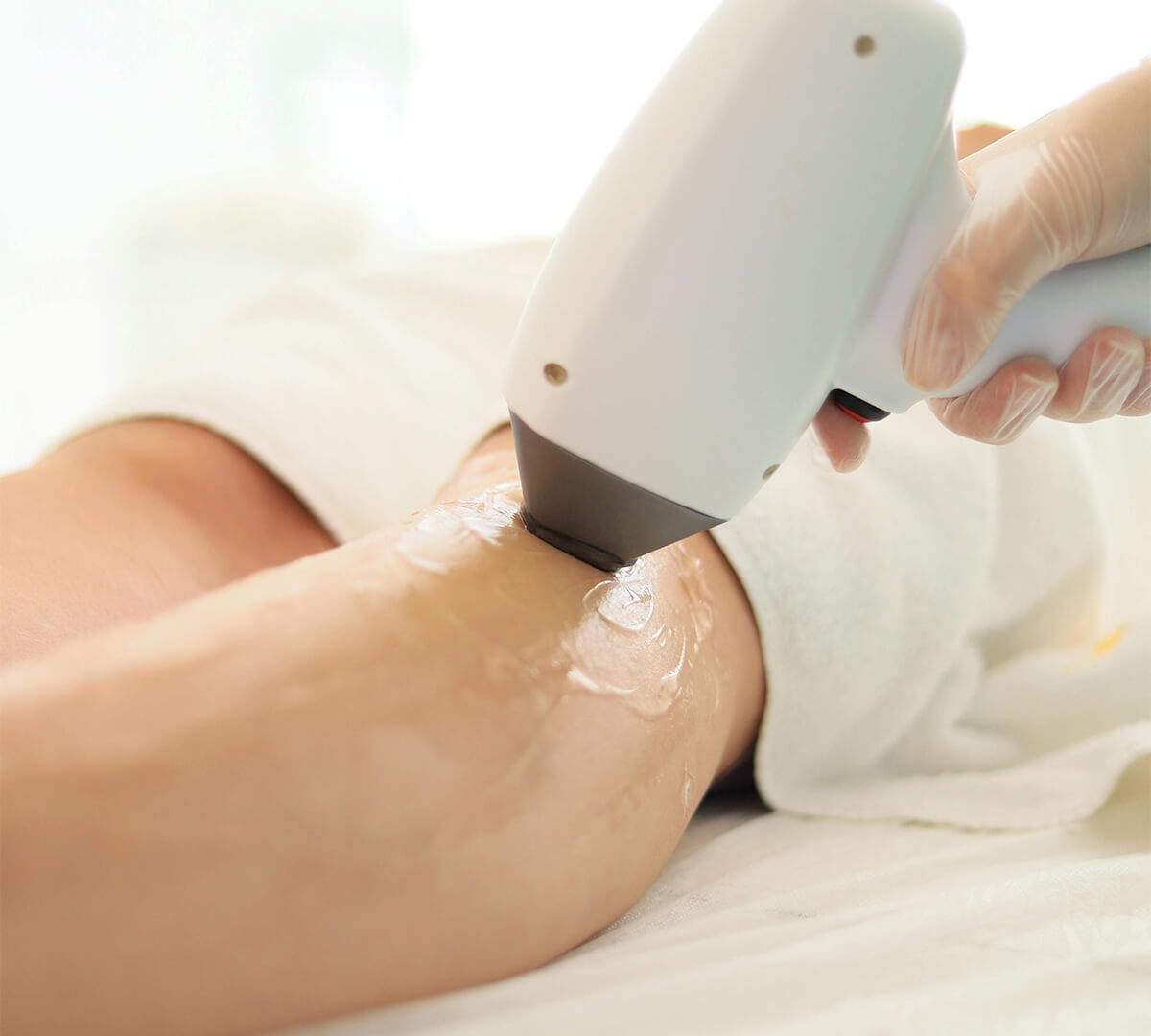
During the treatment, the laser handpiece is passed over the tattoo, delivering short bursts of light energy. Most clients describe the feeling as similar to the snap of an elastic band against the skin. Cooling technology or air is often used to keep you comfortable throughout.
The procedure is relatively quick, taking anywhere from a few minutes for a small tattoo to up to an hour for a large, detailed design. Afterwards, a soothing gel and sterile dressing are applied to protect the area.
Immediately after your session, the treated area may appear red or slightly raised, similar to mild sunburn. Small white spots, known as frosting, may also appear temporarily as the laser reacts with the ink. These effects are normal and usually fade within a few hours.
Over the following days, mild scabbing or flaking can occur as the skin heals. It is important not to pick at the area to avoid scarring. Your practitioner will provide aftercare instructions to ensure proper healing.
Each session will progressively fade the tattoo as the body clears more pigment. You will notice visible lightening after several treatments, with continued improvement over the full course.
Most clients begin to see noticeable fading after two or three sessions, though full removal takes time. Because each session targets deeper pigment layers, the final result often develops gradually over several months.
Results also depend on individual factors such as ink colour, skin tone and how your immune system clears the pigment. With patience and consistent treatments, most people see excellent long-term improvement.
Once a tattoo has been fully treated and the pigment cleared, the results are permanent. However, the process can take several sessions, and some colours or older inks may leave a faint shadow behind.
In most cases, black and dark blue pigments can be removed almost entirely, while pastel shades or white ink can be more resistant. Your practitioner will give you a realistic understanding of what to expect before beginning your course.
Laser tattoo removal is a safe and well-established procedure when performed by trained professionals using medical-grade equipment. The laser targets only the tattoo pigment, leaving surrounding skin largely untouched.
Temporary redness, swelling or mild blistering can occur but heal naturally within a few days. More serious side effects, such as pigmentation changes or scarring, are extremely rare when the treatment is carried out correctly.
To ensure safety, your practitioner will always perform a patch test before your first session and adjust the laser settings to suit your skin type.
Laser tattoo removal is suitable for most adults with unwanted tattoos, regardless of size or placement. It can be performed on nearly all areas of the body, including the face, arms, legs and torso.
During your consultation, your practitioner will examine the tattoo and assess your medical history to confirm that the treatment is appropriate for you.
The treatment is not suitable for everyone. Those who are pregnant or breastfeeding should postpone treatment until later. People with active skin infections, eczema, psoriasis or open wounds in the area should also wait until the skin has fully healed.
Individuals taking medications that increase light sensitivity, such as certain antibiotics or Roaccutane, may need to delay treatment. Your practitioner will discuss any contraindications during your consultation to ensure the procedure is safe.
Good aftercare is essential for effective healing and the best long-term results. Keep the treated area clean, cool and dry for the first twenty-four hours, and avoid rubbing or scratching. Apply the recommended soothing ointment or gel as directed by your practitioner.
Avoid hot showers, saunas, swimming and direct sun exposure for at least a week after each session. Always use a high-factor SPF on the treated area once it has healed to protect the skin.
Following your practitioner’s guidance will help your skin heal quickly and minimise the risk of side effects.
The cost of laser tattoo removal depends on the size of the tattoo, the number of colours involved and the number of sessions required.
Because tattoo removal is a gradual process, most clinics offer package prices for multiple sessions, which can be more cost-effective than booking in individual sessions.
Laser tattoo removal can sometimes be combined with other skin treatments to improve the skin’s appearance once the pigment has faded. For example, fractional laser or microneedling may be used afterward to smooth texture or treat any residual scarring.
Your practitioner will advise when it is safe to introduce additional treatments based on how your skin heals between sessions.
Before your first treatment, you will have a full consultation with an experienced practitioner. During this appointment, your tattoo, skin type and medical history will be assessed. You will also have a patch test to ensure the laser is suitable for your skin.
This is the opportunity to ask any questions, discuss expected results and understand your personalised treatment plan.
Every HydraFacial is completely personalised, ensuring it is safe, comfortable and tailored to your individual skin needs.
After a full course of laser tattoo removal, most clients see a significant or complete clearance of their tattoo. The skin appears clearer and more even in tone, with minimal to no scarring.
Results continue to develop as the body naturally clears the broken-down pigment. With patience and professional care, laser tattoo removal provides a safe, long-term solution for unwanted tattoos, helping you feel more confident in your skin again.
See genuine feedback from patients who had awesome tattoo removal results with one of our recommended UK clinics below.
5 star rating, based on 120+ Google reviews
“Lara was lovely, very gentle & caring.”
4.9 star rating, based on 600+ Google reviews
“Amazing treatment from Carl and the team. Tailored my treatment to what I wanted and helped me feel more confident. Thank you!”
5 star rating, based on 122+ Google reviews
“I came to Permanent Beauty for advice on tattoo removal. Sandra explained the process clearly and made me feel at ease… seeing great results.”
4.7 star rating, based on 130+ Google reviews
“Tattoo removal is a lengthy process and it’s not pain free BUT Roksana always put me at ease and made the whole experience a lot less painful than it could have been! Always pleasant to chat to which is important to take your mind off the lasering. Really pleased with the results.”
5 star rating, based on 100+ Google reviews
“Ink Out transformed my life; the staff were professional and incredibly supportive throughout my tattoo removal journey.”
Join the UK’s most trusted aesthetic and skin clinic platform. Connect with thousands of qualified patients actively searching for your treatments.
Showcase your expertise, display verified reviews, and grow your practice.
| Cookie | Duration | Description |
|---|---|---|
| cookielawinfo-checkbox-analytics | 11 months | This cookie is set by GDPR Cookie Consent plugin. The cookie is used to store the user consent for the cookies in the category "Analytics". |
| cookielawinfo-checkbox-functional | 11 months | The cookie is set by GDPR cookie consent to record the user consent for the cookies in the category "Functional". |
| cookielawinfo-checkbox-necessary | 11 months | This cookie is set by GDPR Cookie Consent plugin. The cookies is used to store the user consent for the cookies in the category "Necessary". |
| cookielawinfo-checkbox-others | 11 months | This cookie is set by GDPR Cookie Consent plugin. The cookie is used to store the user consent for the cookies in the category "Other. |
| cookielawinfo-checkbox-performance | 11 months | This cookie is set by GDPR Cookie Consent plugin. The cookie is used to store the user consent for the cookies in the category "Performance". |
| viewed_cookie_policy | 11 months | The cookie is set by the GDPR Cookie Consent plugin and is used to store whether or not user has consented to the use of cookies. It does not store any personal data. |